Translate this Page
Anniversaries for today :
Welcome to Clash of Steel!
[ About us ]
[ Contribute a battle ]
[ Contribute a review ]
[ Contribute a reenactment group ]
[ Contact us ]
Featured battle : Levens
Part of The French Revolutionary and Napoleonic Wars
Date : 28 February 1793
The Sardinians, advancing into southern France, were stopped by a superior French force. Losses were significant on both sides.
Featured image :
Leyland DAF 4x4 GS Truck
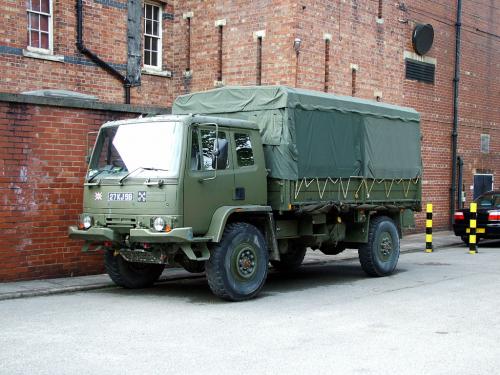
The army's current 'workhorse' 4 ton truck.
Gallery updated : 2022-04-04 08:33:43
Featured review :
Culloden 1746
Stuart Reid
This book is not simply a guide to the battlefield it does much more. The first six chapters are an excellent account of the development of the battle, chapter seven compares the two armies, their similarities and differences, while the final chapter gives advice and guidance on visiting the battle field today. There is an abundance of photographs and drawings, I particularly like the contemporary sketches of individuals engaged in the battle. The twelve maps of the battlefield, each a double page spread and all on the same template, show the movement of the forces. The map of the battlefield today is also on that template. This is a super idea allowing the reader to make immediate comparisons without having to adjust for scale or displacement.
This, the third edition of this book, has been updated to take in the latest archaeological and documentary discoveries. It remains a slim volume of 156 pages and therefore is of ideal size to slip into a rucksack for a visit to the battlefield.
Whether visiting the battlefield or just wanting to read a straightforward introduction to the battle this book is highly recommended.
Pen & Sword Military. Pen & Sword \Books \Ltd., 2018
Reviewed : 2018-09-03 08:40:42